


 Maya Alvarez, Lead Dietitian
 October 2025
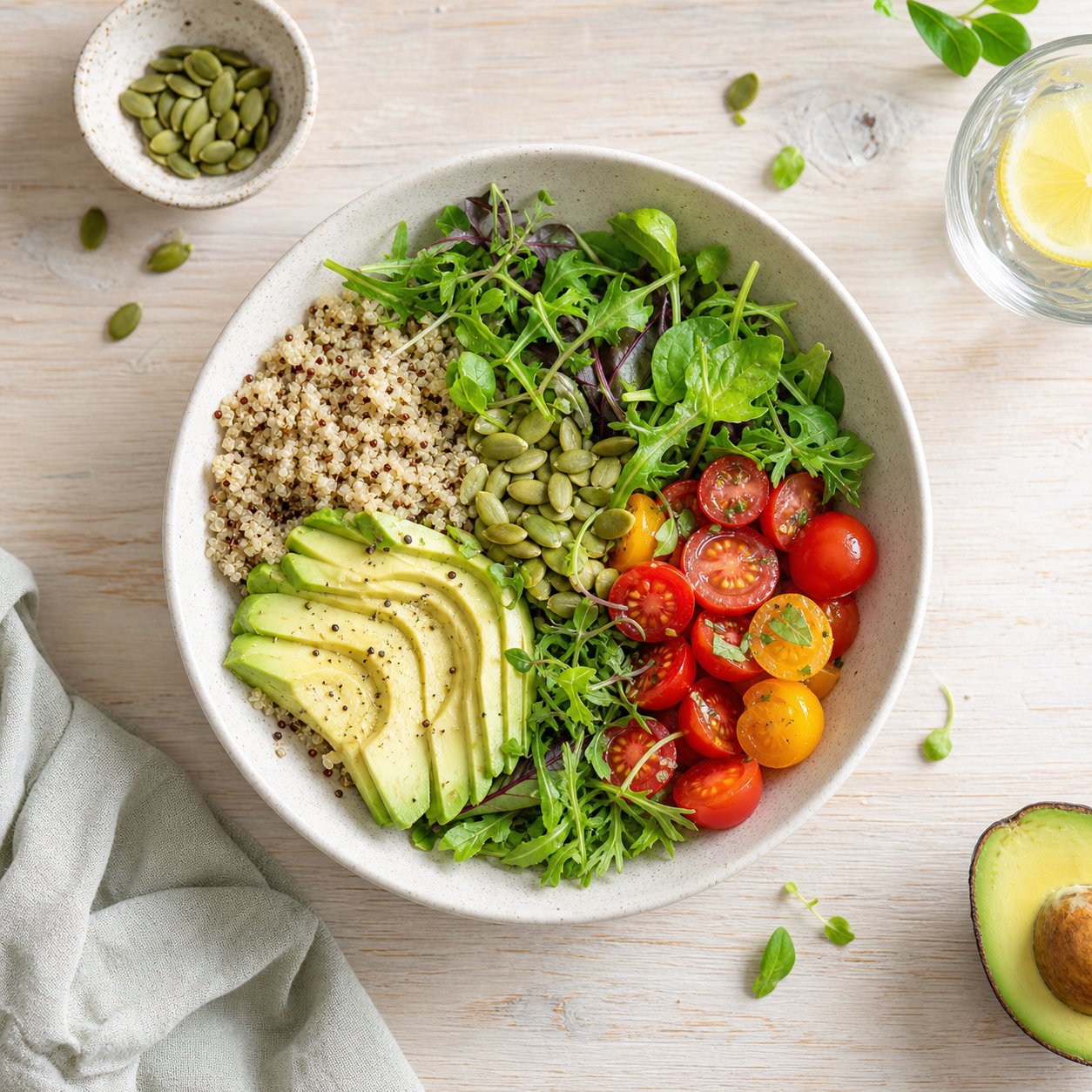
Most people do not need a stricter diet. They need a simpler one. The plans that survive contact with real life — busy evenings, birthdays, travel, children who reject anything green — are the ones built from flexible principles rather than rules.
The balanced plate is our favourite of those principles, because it requires no apps, no scales and no arithmetic. It is a visual method you can use anywhere food is served.
Balance is not a perfect meal. It is a pattern that can absorb an imperfect one.
The plate method in plain language
Picture your usual dinner plate and divide it into three loose zones:
- Half the plate: vegetables and fruit. Fresh, frozen, roasted, raw or in a soup — all of it counts.
- A quarter of the plate: a protein food. Fish, chicken, eggs, beans, lentils, tofu, tempeh, yoghurt or cheese.
- A quarter of the plate: a carbohydrate food, preferably a whole-grain or starchy vegetable version — brown rice, wholemeal pasta, oats, potatoes, sweet potato, corn or wholegrain bread.
Add a source of healthy fat — olive oil, avocado, nuts, seeds or oily fish — and you have a meal that satisfies, sustains energy and covers the nutrients your body actually needs.
Protein at every meal
Protein is the part of the plate most people under-do at breakfast and lunch, then over-do at dinner. Spreading it across the day supports muscle maintenance, steadier appetite and better recovery from exercise — particularly important as we get older.
- Breakfast: Greek yoghurt with nuts and berries, or eggs on wholegrain toast.
- Lunch: leftover chicken or chickpeas added to a salad or grain bowl.
- Snacks: cottage cheese, hummus with vegetables, or a handful of nuts.
- Dinner: the usual fillet, curry, chilli or tray-bake — just make sure it is genuinely present on the plate.
Fibre: the quiet workhorse
Fibre supports digestion, cholesterol levels, blood sugar steadiness and a healthy gut. Most adults do not get enough, and it is rarely because of one missing superfood — it is about small upgrades:
- Choose wholegrain bread, pasta and rice when you can.
- Keep the skin on potatoes, apples and pears.
- Add beans or lentils to soups, sauces and salads.
- Keep frozen vegetables and tinned pulses at home for the days when fresh produce runs out.
Increase fibre gradually and drink enough water, or your gut will let you know it is happening.
Fats, flavour and satisfaction
Fat is not the enemy — bland food is. Meals that taste good get repeated, and repetition is what changes health. Olive oil, nuts, seeds, avocado and oily fish are excellent choices. Herbs, spices, citrus, garlic, ginger and vinegar add enormous flavour with no downside, so use them generously and let healthy food earn its place in your routine.
Eating out and the days that go sideways
- Scan for the vegetable option first, then build the meal around it.
- Order what you actually want rather than a sad compromise — then eat it slowly and stop when comfortable.
- Drinks count. Sugary sodas and cocktails are easy calories; sparkling water or a smaller glass of wine usually leaves you just as happy.
- One meal is one meal. The next one is a fresh chance — not a punishment or a compensation.
Where a dietitian genuinely helps
General advice goes a long way, but there are situations where individual support makes a real difference: managing diabetes or cholesterol, eating well alongside a medical condition or medication, food allergies and intolerances, vegetarian and plant-based eating, supporting a weight or muscle goal, and feeding a busy household with competing preferences.
In a consultation we look at what you already eat, what your week actually looks like, and then build a plan around that — with practical shopping suggestions and follow-ups so adjustments happen before motivation runs out.
If nutrition has felt like a series of restarts, that is usually a sign the plan was too rigid rather than that you were. A balanced plate is a far easier thing to keep than a rulebook.


 Wellness and Nutrition